Short answer: Near Wilmington, NC, stamped concrete should be resealed every 2 to 3 years — sooner on pool decks and driveways. Salt air, strong UV and humidity break sealer down faster than inland. Reseal when water stops beading, the color looks chalky or faded, or the surface feels rough. Use a breathable, UV-stable acrylic sealer with an anti-slip additive.
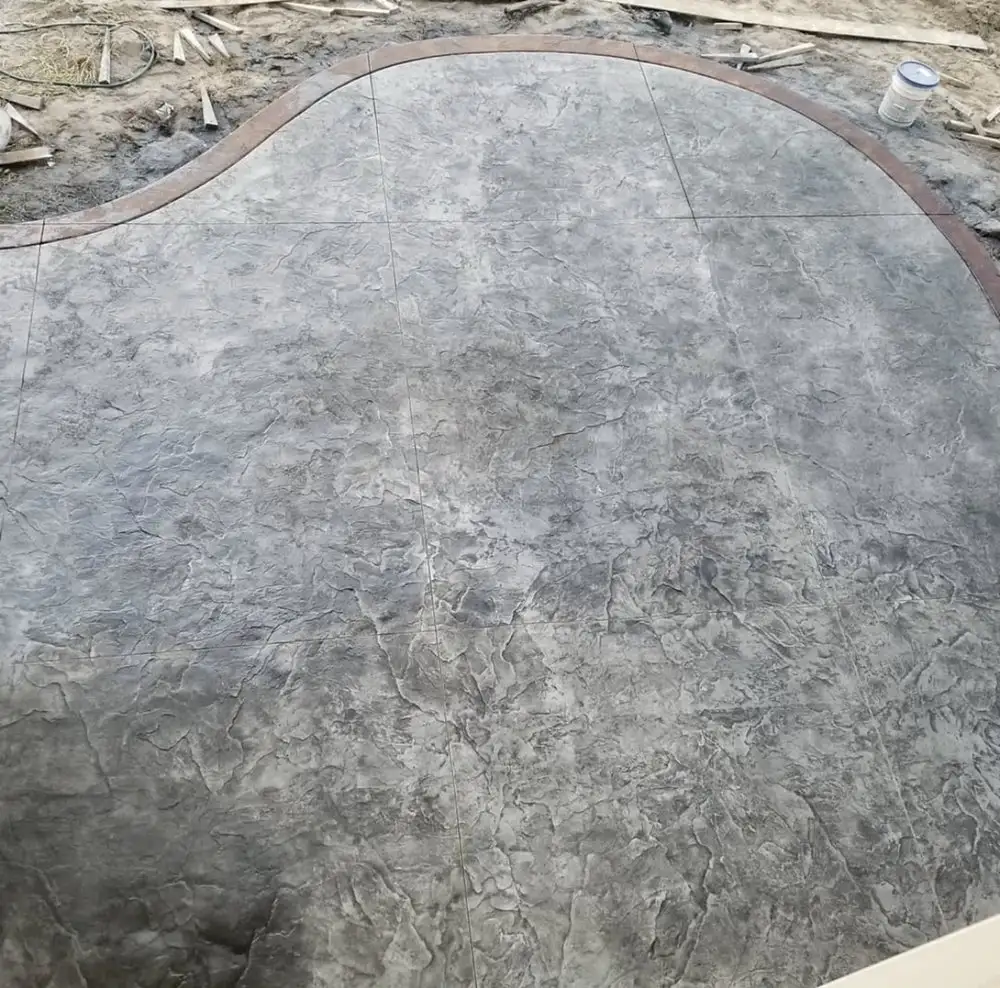
Signs your stamped concrete needs resealing
- Water soaks in and darkens the slab instead of beading on top.
- Colors look washed out, chalky or gray, especially in full sun.
- White haze or cloudy patches (moisture trapped under old sealer).
- Mildew or green staining in shaded, damp areas.
- The surface feels rough or sheds sand-like grit.
Which sealer to use near the coast
| Sealer type | Look | Best for | Notes |
|---|---|---|---|
| Solvent-based acrylic | Rich, wet look | Patios, driveways | Deepens color; needs grit additive for traction |
| Water-based acrylic | Satin / natural | Shaded or damp areas | Breathes well, lower odor, less gloss |
| Penetrating silane/siloxane | Invisible | Plain concrete, salt exposure | Repels water and salt; no color boost |
Step-by-step resealing
- Pressure-wash the slab and let it dry at least 24 hours.
- Treat oil, rust or mildew stains before sealing.
- Tape off siding, doors and landscaping.
- Mix anti-slip grit into the sealer for pool decks, steps and walkways.
- Apply two thin coats with a roller or sprayer — never one thick coat.
- Keep foot traffic off for 24 hours and vehicles off for 48–72 hours.
When to call a pro
If the old sealer is peeling, white or blushed, it usually needs to be stripped or re-dissolved before a new coat — otherwise the problem gets sealed in. MJ Profesional Concrete cleans and reseals stamped concrete across Wilmington, Wrightsville Beach, Carolina Beach and Leland.
Related service Concrete Repair, Resurfacing & Sealing Free written estimates in Wilmington and nearby towns.